VIRTUAL REALITY
The future of flight simulation has always been deeply rooted in advancements of software. Over the past 3 decades, since the beginning of Microsoft’s first simulator, we’ve seen software grow in lock-step with the computer hardware that serves to run that software. In the beginning years of Microsoft Flight Simulator the instrument panel was displayed on a single 2D panel full of what we call “2D gauges”. This remained the status quo for at least a decade or more until developers began focusing more and more on what we now call the “3D environment” and the Virtual Cockpit or “VC”. The VC was originally a novel add-on in Microsoft 2002, 2004, and FSX. But in those days the VC’s barely served to supplement what could already be done, ..and be done very well.., with many 2D gauges displayed on 2D panel “sets” which could showcase an entire aircraft cockpit among 1,..2,..3 or even 5 or more panels that you would open and close via small convenient “panel icons” found on each panel, especially the primary 2D instrument panel called the “Main Panel”. As time rolled on, most sim software developers began to focus more on the Virtual Cockpits which are now commonplace to fly a wide variety of aircraft from a single computer screen.
The VC, as we know, is a full cockpit recreation which allows you to pan around and zoom in on instruments, the overhead panel, your feet, the rear seats, or even that sexy blonde copilot. This must all be done with a computer mouse and zoom wheel and or via a head mounted tracking device. The benefit of the VC is of course to have an entire cockpit on a single screen and not have to cycle through several 2D panels like was done a decade or two ago, nor incur the potential added costs of having several displays where you could, if desired, undock all of the 2D panels on to the other displays in order to create a very realistic flight simulator cockpit (something we at SimSamurai have obviously championed and employed since 2006). Regardless of our own love of 2D panel sets and their perfect use in large, dual seat simulators, the single monitor Virtual Cockpit, by itself, has been a huge advancement for flight simulation. It quickly grew in popularity from the standpoint of being able to get to know the entire “in’s and out’s” of any aircraft right from the comfort of a single computer screen set on your home desk. As the VC started to become the norm with FSX, the glory days of 2D panels began to fall out of favor, especially for single monitor “desk jockey” flight sim enthusiasts who didn’t want to spend extra money on a home cockpit. And it’s understandable for many reasons. Building a high-quality simulator is not the cheapest endeavor and it takes work. As detailed on our 2D-VIP page, this was also due to nearly overnight changes from CRT displays to LCD displays.
Regardless, we can easily assume the last 30 years of development of the 3D Virtual Cockpit was for the eventual intention of taking this environment a step further with the head-mounted visual devices we now call “VR Helmets” or “VR Goggles” which have a screen full of dense micro-pixels just an inch or two from your eyes. Only as of 2025 have these devices finally become much more viable for use in flight simulation, especially for long flights lasting an hour or more. And only in the last few years have their visual resolutions finally become good enough for realistic IFR training where the most important aspects are to stay focused on small details of cockpit instrumentation, and not just external eye-candy of the earth, clouds, and a horizon line. And while this amazing technology should be embraced in most respects, it still faces several major issues and hurdles that people need to fully understand if wanting to use these devices for professional quality flight training. These key issues are;
Costs vs Flexibility and Usefulness
To achieve the resolutions required for life-like simulation with virtual reality, a top tier headset will currently cost anywhere from $2,500 to $5,000 and ideally should include what is called Augmented Reality or AR and or Mixed Reality (MR). On the highest end of the scale, headsets like the Varjo XR-4 costs $25,000 or more. Yes. You read that right. These features, along with the default aspects of VR can allow you to still see your real, physical instrumentation and flight control hardware(like a yoke and throttle) in a simulator cockpit enclosure, or just on your standard home/office desk. This means AR and MR equipment can (or should) seamlessly work in conjunction with any physical cockpit enclosure to provide a combined hybrid experience. The only issue of course is the costs associated with expensive VR/AR/MR equipment all while asking how much is that equipment actually necessary to provide you with a realistic training environment. To be clear, you have to weigh the costs to benefits carefully. You also have to assess what your actual goals are. Are you just wanting to sight-see for fun, or do you want to use your hardware for professional training? Maybe you want to do both. The reality is that each scenario faces some very big challenges and hurdles with VR. Not everything is as it often gleefully appears on the surface.
While AR and MR is not necessary if you have a fully featured VC, and are ok with using “hand wand” devices to manipulate cockpit controls, it can still be a great feature to have for use with a more formal cockpit simulator where you want to see your hardware controls like the throttles, radios, and autopilot. And if only used with VR, then all of these components still need to be set somewhere to allow you to develop muscle-memory for their location. This is very important, because without use of AR you are fully enveloped in VR only, and have no idea where those physical controls exist. This is in fact why AR was developed. Sim builders like the “Warthog Driver” on YouTube have, in recent years, demonstrated how AR can be used with a detailed physical cockpit which has countless tactile controls. Another feature of AR and now MR (Mixed Reality) is to map what you see in your real cockpit into the VR environment so that when you reach for something like a throttle lever in VR (and thus not using AR), you will feel the real corresponding lever in the physical cockpit. And while this is an amazing leap of combining VR with real, physical hardware, it also means you are limited to only flying that single aircraft. If you were to relocate any physical item you would have to feel and fumble around for it (or would use AR). The point of explaining all this is that while VR, AR, and the latest MR can be exciting and fun from a technical gadgetry standpoint, it can also become frustrating, buggy, and impracticable at times for more formal professional training. And while not completely inflexible, nor useless, you simply need to understand all of its hurdles and limitations, the greatest of which could simply come down to costs of high end virtual reality equipment which can facilitate all this modern magic. It’s simply not an inexpensive endeavor.
We also have to consider that at best, the main purpose of VR is to simply see the simulated world and objects in 3D rather than 2D. And most ideally, if you had to choose whether to use it for the inside or outside of the cockpit, our guess is that 99.9% of people would want to use it for exterior visuals to see clouds and ground objects in 3D. And little did you know, if that is a goal, some 3D projectors do this without need of VR goggles but instead only require 3D glasses (much like what you use in movie theaters. So to be clear, VR is not just for viewing cockpit gauges (obviously) and if people had to choose, they will mainly want it for exterior visuals. And luckily 3D visuals for VR work best in “VFR” visual conditions where you are able to see the ground and objects to better determine your distance from them. Because of this we can safely assume that VR is likely much better suited for VFR and flight in visual conditions rather than IFR in instrument conditions where the exterior is completely greyed out or is as black as night if used for night flights.
So this begs our first question. And that is why would you want to spend all that money on a VR headset if commercial flight training is mainly focused on IFR flights which also commonly fly in IMC (Instrument Meteorological Conditions).. a.k.a. “The Soup”. The reality is… you wouldn’t. We would therefore want to use VR in the most optimal day time conditions to experience the most Depth Perception. After all, that’s what you actually kind of paid for. Depth perception is what gives VR the “wow factor” that everyone enjoys so much. It simply makes things *feel* more real because of the perceived depth and perceived distance to objects that you don’t get in 2D environments. In IFR conditions however, especially in full IMC, which is where professional pilots often live and earn their pay, the ability to see the ground (while nice) is also completely irrelevant except for takeoffs and until close to landing the aircraft. Therefore, apart from some military training applications where visual acuity and depth perspective may be absolutely necessary or “mission critical”, both VR and AR / MR may, unfortunately, be considered wholly unnecessary for standard procedural flight training in commercial training which mainly focuses on IFR procedures. That’s simply the hard reality of using VR in a professional flight training environment. In other words, it’s simply not necessary.
Even today no professional sim (that we know of) exclusively uses VR. And while fun, awesome, cool, (and all the other exciting adjectives which come to mind for this wondrous technology), the reality is that for now at least, it’s actually not necessary for any professional simulator which has a primary focus on IFR training. It’s great, ..sure.., especially for VFR conditions as we just discussed, but it actually costs a lot, and ultimately provides no real added value to any VFR or especially IFR training experience. At least not yet. At best it can provide an added sense of disorientation while flying through marginal VFR conditions and through light IMC conditions. It could at least do that very well to enhance realism of the confusion experienced in conditions where visual acuity of the horizon and ground is spotty and not fully obscured. As many know, this realm of partial visibility in not being full visual, nor full IMC, is often where spatial disorientation can hit pilots the hardest and has quickly led to fatal accidents. However, when in full IMC conditions with VR, the effects of 3D are actually rendered almost useless. The perception of depth in this case is relegated to the cockpit only and disorientation aided by VR actually lessens. We will explain why in a moment. So again, in scenarios of full IMC it can be easily argued, even easily demonstrated, that Virtual Reality does not currently help in IFR training.
To be clear, both simulator pilots and real-world pilots alike (who are often one and the same) who use simulators for both VFR and IFR training, have all been absolutely fine for decades without VR. In fact from 2000 to 2015 the overly basic Virtual Cockpits and sim aircraft systems modeling were so ill-equipped and jokingly “hokey” to real pilots, that there was often no need or desire to use the VC at all, much less entertain using it with VR. Most of us older pilots who used home simulation in its early years know that for those 15+ years from ~2002-2017, both the VC and VR were mostly considered to be a gimmick for “gamer bros”, save for perhaps aircraft like PMDG’s 737 and a few others. Overall, the majority of sim aircraft left far too much to be desired as you unrealistically clicked and panned everywhere with a mouse, only to find that just 1/4 of an overhead panel in an airliner was operational. You might’ve also been lucky to get the lights on properly after spending 10 minutes trying to set the radios or autopilot. Luckily this has greatly improved! But for many of us at the time, the lackluster VCs, for a full decade, made most people double-down on tactile avionics hardware and yes..more 2D gauges for 2D panels. For so long, both virtual cockpits and virtual reality was, and in some respects still is, “child’s play”. But the reality is they have both progressed immensely since 2020 alone and now, as of 2025, are finally maturing to professional quality standards that can serve as valuable training aids for real-world pilots. Thank God… finally.
However, while both VCs and VR have slowly become an incredible advancement of computer technology, much in the same way that AI is now doing for making art, memes, music and videos, we still have to continually ask ourselves… is all this new tech really all that necessary for professional flight training? Maybe it is… and maybe it isn’t. Maybe the old samurai ways of 2D panel sets are still the best overall for those who just want to see gauges in real life sizes and want to have a home cockpit that actually feels more like a real aircraft and less like a desk. The reality however, is there is no true final answer. It’s all a matter of choice and affordability. Maybe having both is the best answer.
To learn more about the old school methods we’ve discussed please visit the 2D VIP Page.
Regardless of our love / hate with VR please.. read on. You need to know all this information about the future of VR, …you whipper-snappers!
VR for Dual Pilot Training
Just as detailed in the last sections, we feel VR is best suited for flying in slower VFR / visual environments and was especially designed around creating this type of joy (and perhaps not much else). And please understand; VR itself doesn’t actually model aircraft systems. It can only show you what a cockpit looks like. So while VR can be very useful for displaying an entire aircraft exterior and cockpit interior in 100% detail, it is also ultimately useless unless every bell, button, switch and whistle is modeled in the simulated aircraft. Until that happens, you are only using VR as wholly expensive “eye-candy” device to view what is essentially a very expensive 3D “paper tiger” along with 3D clouds floating by your windscreen. And while “faux simulation” with paper posters on countless walls of flight schools have been used for the last 75 years or more, much to the disappointment of many, we know for sure the costs of those posters cost, far, far less than VR, yet they served a very important purpose in actual flight training. That purpose of course is the word familiarization.
For dual pilot scenario training, the hurdles to overcome with VR is that pilots have to get familiar with working together. And so for this to occur in VR it is necessary to have each pilot see (at minimum) the hands and actions of the other pilot. This can potentially be done with Augmented Realty (AR) or Mixed Reality (MR), where the actions of one pilot engaging switches and controls could be seen and immediately recognized by the other pilot. And in this scenario, even if 100% accurate for both pilots, it will likely mean incurring a cost of at least $10,000 or more for two linked VR headsets (and hopefully with just one PC and two video cards to do it). And while feasible, the other issue is that all of the equipment purchased would be outdated within just 3 to 5 years time. So this too is extremely important when considering such endeavors. Unfortunately, all electronics, especially those with emergent technologies like VR, have a massively high rate of value depreciation because technology increases so fast. What is bought for $5,000 one year is worth $1000 or less just five years later. So this means you may spend a considerable amount of money just to test features in a virtual cockpit environment with aircraft software that may or may not even have all systems fully modeled. A lot of people wind up making these types of big purchases just to prove and boast that such scenarios can be done. And in the process of excitement to see it happen they never stop to think if they actually should. As we know, practicality often gets thrown out of the airlock in favor of instant gratification.
To summarize, people must carefully weigh out the true value of VR in flight training and honestly, keyword honestly, explain why it is needed and why it is an intrinsic resource that can be justified for its costs. The reality is simply that it’s much better used for joyriding in visual conditions than it will ever be for IFR training where real tactile gauges and or full scale 2D gauges is a better if not also cheaper option. Furthermore, we must ask how and why this should ever be incorporated into professional flight training in a dual pilot cockpit where the vast majority of time is spent flying IFR flight plans where, despite if external weather conditions are VFR and “CAVU”, the pilots are still closely focused on cockpit instruments to maintain a tight flight plan. So is VR really needed for that? The answer is resoundingly No. But despite that I think we can all agree that we love this new technology. It’s exciting and fun. There’s just no denying that. So how can this modern equipment and expense be justified as we move into the future of flight simulation over the coming decades? We certainly are not saying it can’t be justified. We are only saying it doesn’t seem so useful at the current time. It is nice. It is fun. It has its place and purpose. But how and why is it useful? Is it actually needed? At minimum you can at least currently use virtual reality for landing acuity below minimums while IFR and or for practicing circle to land instrument approaches where having a visual sense of ground proximity is very important. It can at least provide those two things right now in addition to creating the awe of seeing those puffy 3D clouds while getting up to cruise altitude or descending from it. But again… at what costs? What are you actually willing to pay for those brief periods of flight through 3D clouds? And is this some sort of addiction for you lol? Be honest.
Depth Perception and Spatial Disorientation
As briefly discussed in the last section, VR allows for an acceptably realistic level of 3D depth perception, and that of course is its main selling point. It’s literally nothing other than that. Depth perception is the main point..full stop. But benefits also come at a cost. Not just financial, but also physical. The current primary issues with VR is the sensation of motion and g-forces that don’t actually accompany what you are seeing in “stereo-vision” and for many people who have used VR, they quickly experience motion sickness. Nausea can develop over a period of time, typically 30 minutes to an hour, especially if performing various pitch and bank maneuvers in regular succession. This issue is caused by the fluid in your inner ears not matching up with what your eyes are conveying. You can appear to be banking, but your ears will say you are strait and level (because you actually are when sitting at a desk). So if you’ve never tried VR we can only suggest keeping a plastic bag handy! A lot of people want to enjoy VR but quickly find that its a nauseating experience. What’s interestingly different is that in simulation this effect occurs more in VFR conditions and less in IFR conditions. It’s actually opposite of the real world and of course you would want to mimic that instead. Your goal would of course be to not feel very disoriented in VFR and only feel greater disorientation and nausea in IMC conditions. But because your butt is still flat on the ground, if you take exterior visuals away in VR, you actually become LESS disoriented. So that too is another strike against it for use in a professional flight simulator.
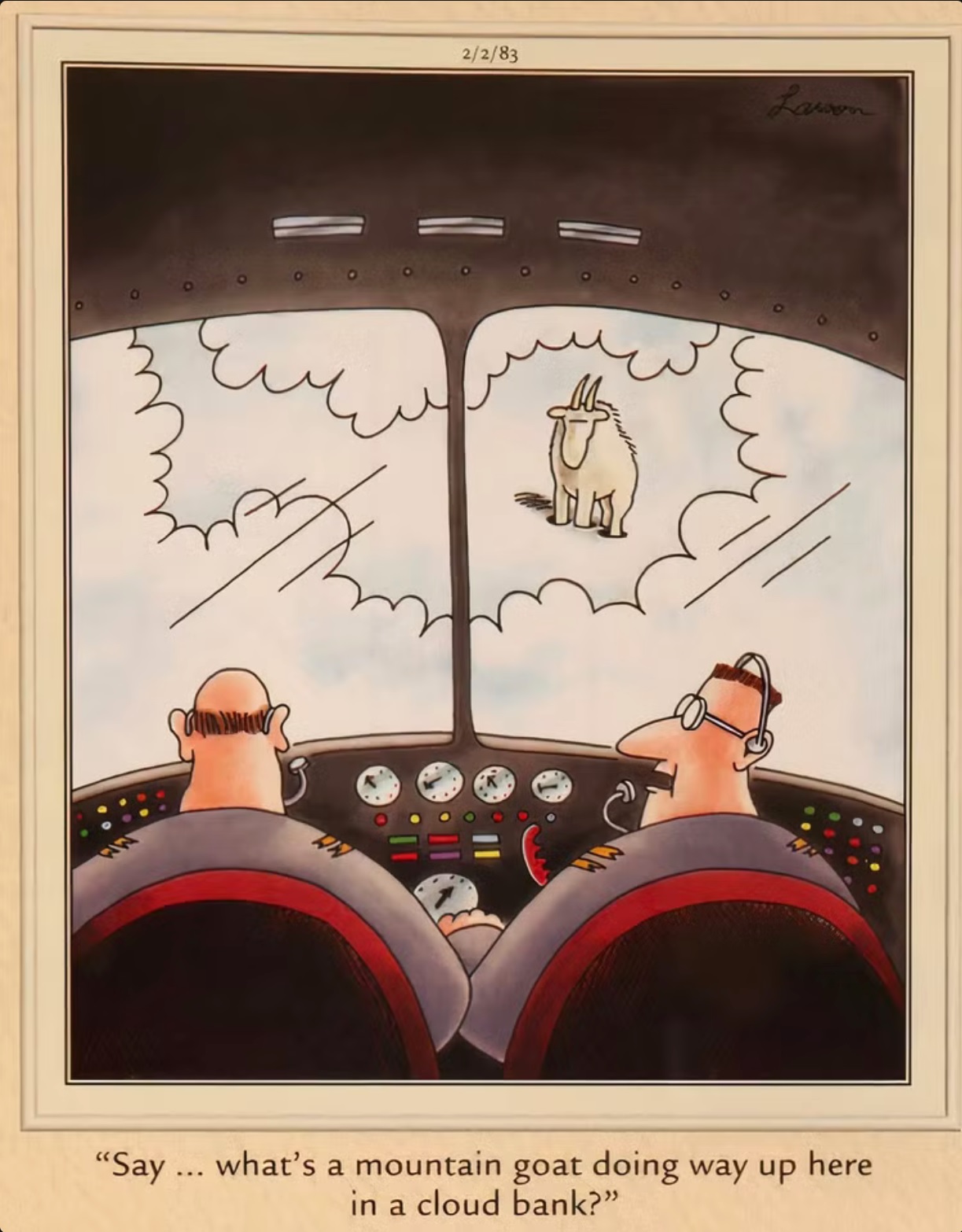
The other current major issue with VR is simply with depth perception itself. VR goggles provide two of the same images, one to each eye, and modifies them so that the eyes and brain see a stereo-scopic image, hence “3D”, but it is in fact not actually true 3D. You only get true 3D in the real world when, for example, you may see another aircraft approaching or maybe you see some goat up on a mountain as you fly by. Much of this ability is due to how your retinas expand and contract to focus on any real object that is either close to you or further away. It’s something we all do naturally and take for granted. While using VR however, you cannot do this because the images or objects you want to focus on are not real. They are only on a screen that is set very close to your eyes and your eyes want to focus past the screen. Therefore the main hurdle that VR is currently trying to overcome is retina tracking that can adjust the image in real time based on a sensor that monitors what your retinas are focusing on. Yes wow. Regardless, ..proper eye focusing is still a huge issue with VR. It’s a big limitation of the technology. At least for now.
Currently, in order to “focus” and see distinct details in a VR virtual cockpit, you have to lean forward, close to the virtual instrument panel to see desired details. Sit back in the virtual seat and those fine details disappear into a blur and you cannot just “squint” or refocus your eyes to see the details now 2 feet away in cyber-space. Again, you have to physically move your head much closer to the object you want to see in detail. Therefore for professional IFR training where you are doing countless things at once while flying the aircraft; talking to ATC, needing to reference an approach chart, etc., you would not want to constantly lean back and forth and practically stick your face against a virtual instrument panel to read very important things like airspeed, heading, and altitude. This quickly becomes annoying, problematic, and is ultimately very unrealistic. I haven’t even included the other problems associated with having to use a control wand or mouse for clicking on various cockpit items while also needing to keep one hand on the control yoke and the other hand on the throttles. We humans only have two hands. So I guess in these cases you really have to practice the old slogan of “stay ahead of your aircraft”. Maybe this juggling act that VR forces on you is somehow a bonus to practice high levels of concentration. Unfortunately however, it’s just more of an annoyance if anything and is yet another hurdle to overcome with using VR. I think we have at least 4 or 5 strikes against it now. I hope you are starting to better understand the costs vs benefits.
G-Forces
The final elephant in the room that plagues all forms of simulation is the absence of G-forces. When flying a real aircraft G-forces can heavily contribute to the effects of spatial disorientation especially when visual acuity and reference to the horizon is taken away. Countless pilots have died from this issue and it is something flight simulation will never be able to simulate. G-forces can’t be simulated simply because it requires actual motion to occur. Your body must actually move and accelerate or decelerate. And that is something which will never occur in any home desk simulator, much less even a large Level-D motion simulator on a six-axis motion gimble. So what is the solution? What can be done? How can we make flight training even more realistic even though lacking forces that induce disorientation? Fortunately, I have a few final answers. Apart from things like VR and AR or MR which can use hyper-realistic VCs with all aircraft systems modeled, there really isn’t much left to do apart from putting all the equipment on a motion base to at least give some pseudo-sense of G-forces. Motion, especially abrupt motion, helps confuse the brain when it can’t tell which way is up. The only thing left to do then is find other final ways to trick the brain to mimic the mixed signals that occur in IFR flight, specifically the disorienting sensations that occur when all exterior visual references are lost. Fortunately this can be done to some extent with motion systems and some other new experiments which scientists are working on, but G-forces will always be relegated to an experience which can only be felt while flying a real aircraft, (or that time you took dad’s vintage Buick out in the snow and wound up in a ditch).
The Brain Game
To close this discussion about VR and it’s usefulness or lack thereof in a professional flight training simulator, especially one which focuses on IFR procedures, let’s talk about the final frontier of VCs, VR, AR, MR, and advanced flight simulation. In our opinion, while VR is not wholly necessary for IFR training, it could become much more useful once the issues of retinal focusing and depth perception have been overcome. This will not only help panel instrumentation to be seen more clearly, it will also help reduce some of the motion-sickness effects of VR ..but only some. Lastly, the final most useful thing that could occur to resolve these issues is to have a supplementary head-worn device, one that would provide electronic signals to the brain which mimic what the aircraft is doing. Therefore if pitching and banking, you would correctly feel like you are actually pitching and banking while in VR and all without any large, mechanical, costly motion platform. This would therefore reduce, if not entirely eliminate, the motion-sickness which is commonplace while using VR in clear VFR conditions where your eyes will say you are pitching and banking but your ears say you are not. Likewise, once you enter IFR conditions the device would either continue to match the aircraft movements, or.. or.. better yet would be adjusted by an instructor to start feeding incorrect signals and induce varying levels of spatial disorientation. Therefore, with enough tweaks, this device, while in IFR and turbulent conditions should, hopefully by 2035, allow you to throw up all over your guests at your big “sim reveal party” as you boast how totally realistic your sim has become and in your moment of joy you shout up to the sky ..”It’s as real as it gets!!” One can hope. One can hope.
This is where simulation and VR actually need to head in order to be truly useful for both VFR and IFR flight training for the long term. If you can’t have a device that is able make fine tuned adjustments to reduce mixed signals and nausea, or one that can also be tweaked to make you throw up, wet yourself, or have dire, abject fear while thinking your instruments are totally wrong (while they are actually right), then I will insist that whatever gobs of money you spend on these latest trends, fads, and VR equipment, just to gaze at sunsets and beautiful puffy 3D clouds, will not be worth a dime to serious pilots who really want to know what flying in true turbulent IMC conditions can be like. It cannot be understated that feeling those conditions on a regular basis and getting used to those conditions, and surviving those conditions, is 100% what is going to save your life one day. And shouldn’t that be what a proper simulator is actually used for? -Yes. Yes it is.- It should never only be about your loving gaze at 3D clouds and a realistic virtual cockpit. It should always be about becoming a safer and more competent pilot, one that survives in the face of danger.
If we can combine all this “new-fangled” VR technology with some motion, simulated turbulence, and then be able to turn on/off the “puke factor” device when entering IMC conditions, you will undoubtedly have the best, most realistic simulator ever made. Short of putting wings on it, it simply won’t ever get any better than that. And now that you have all this information at hand, you only have two more things to consider; the old sayings of “a fool and his money are soon parted” ..or.. “shut up and take my money!” Whatever you choose with your goals, choose wisely and best of luck.
And just be mindful of the goats.