DIY COCKPIT DESIGNS
SimSamurai offers several unique DIY designs for flight simulator cockpit enclosures. Since beginning operation in 2008 we’ve sold hundreds of sets worldwide and have fabricated over 100 of our designs for both professional and low-hour training pilots, simulator hobbyists, various schools, universities, flight clubs, and even some regional airlines and military units worldwide looking for affordable and easy to build solutions that did not involve the time, cost and complexity of trying to recreate a real aircraft replica. In 2012 we also sold a simulator to a university working on a joint project with NASA. So we’ve had real astronauts using one of our simulators. You know how it goes.. Space.. the Final Frontier!
Simulators, of any type, can be a complex bird. In case you are not aware, most real aircraft fuselages do not actually make for good flight simulators. They are often much smaller and more cramped than most simulators, and are simply problematic in most classroom environments. Not only that, they can be very costly and difficult to obtain and difficult to re-equip and configure with original aircraft equipment. In short, real aircraft don’t make for great simulators. They can be used, yes, of course, but essentially require that you re-equip them with the same size of exact equipment that came out of them and this means you are limited to only flying that single aircraft. And while that is ok for some people, it’s not ok for everyone. Because of these facts and more, we charted a course in 2006 to look towards the future. As you will see on our 2D-VIP page we regularly blend our designs with virtual instrument panels to remain “fleet flexible” so that one simulator can be used for several aircraft. This save a lot of money on equipment and allows pilots to become familiar with multiple aircraft.
In having a background in aviation, architecture, construction, and industrial design, we set out 20 years ago to create unique cockpit shell designs which are meant to save time and cost to build and serve to reduce expenses to get into a formal flight training environment quickly, ..one that far surpasses a common desk. Costs of building these enclosures can range from $500 to $1500 depending on the model and final materials and trim selections. You then add on cost of your hardware, displays, computer, etc. Once built however, you will have something well-designed that will last decades.
Originally we had over 10 designs, but as of 2025 we reduced our fleet to 6 distinct offerings to accommodate the most common core needs and typical space constraints. 4 designs are featured below, and the remaining designs are on our ProLine page. All of the DIY designs featured below can be made with typical home construction tools and or can incorporate some CNC parts as desired. Each plan-set is specified to be be made of high quality plywood and typical softwoods, hardwoods, and various exterior laminates for exterior skin such as ABS plastic or Aluminum. Each design plan-set includes several pages of mechanical drawings and a very detailed DIY builder manual for ease of construction. Each step is precisely written in the exact necessary order to save time throughout the building process. Lastly, we include details and recommendations for equipment, much of which can be found on the Equipment page. To purchase any set, please follow the instructions on each cockpit page. Welcome to SimSamurai and thank you for flying with us!
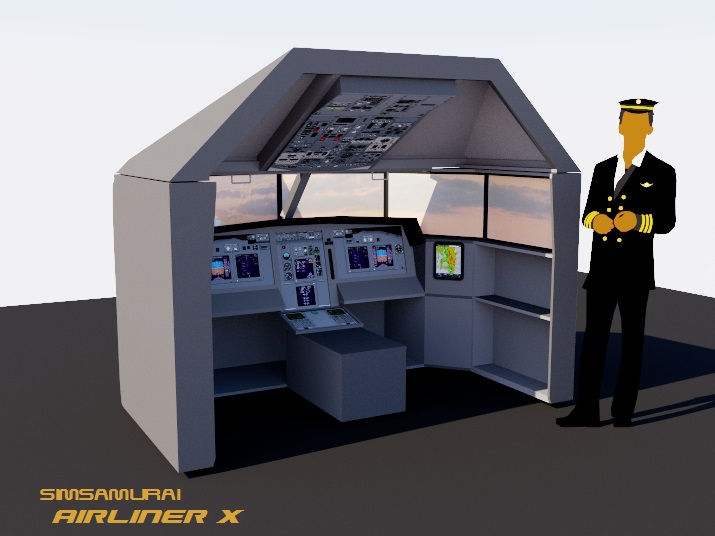
The Airliner X is our largest design and is perfectly suited for any jet airliner from Boeing, Airbus or others. The upper deck can house up to six 32″ displays for visuals or can instead use three large ultra-wide displays. Alternatively, it can use a projection system out front and a hybrid combination of a projector with two side view displays. The instrument panel can house a replica panel or three 24″ displays, as well a lower 20″ touchscreen display for the FMS / CDU system and other functions. The overhead canopy can house a 42″ touchscreen display (or smaller).
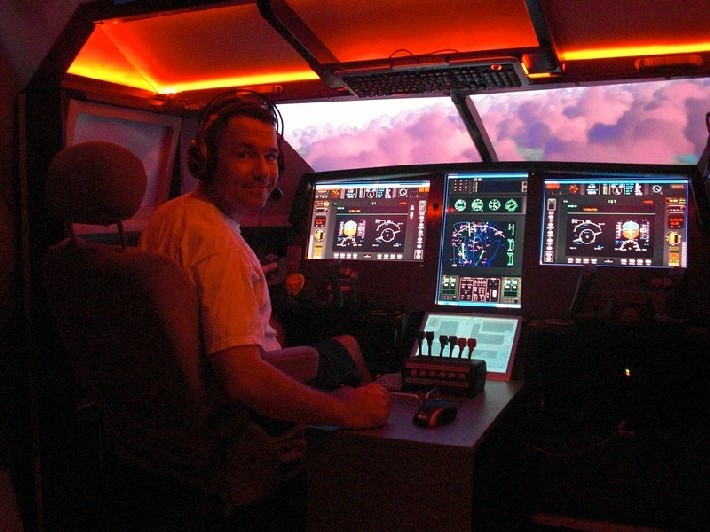
The RJX is a full re-imagination of our original XS-1 Sora. It is very similar in design to the ALX but is approximately 1.5ft (46cm) smaller in width and depth to save space and give a more compact feel. It is very well suited for all business jets, regional jets, and mid-size turbo-prop aircraft. It can use up to six 24″ displays for visuals, three mid sized ultra-wide displays, ..or projection out front. The instrument panel can use three 22″ displays with the center set in portrait style.
Cockpit plans coming soon!
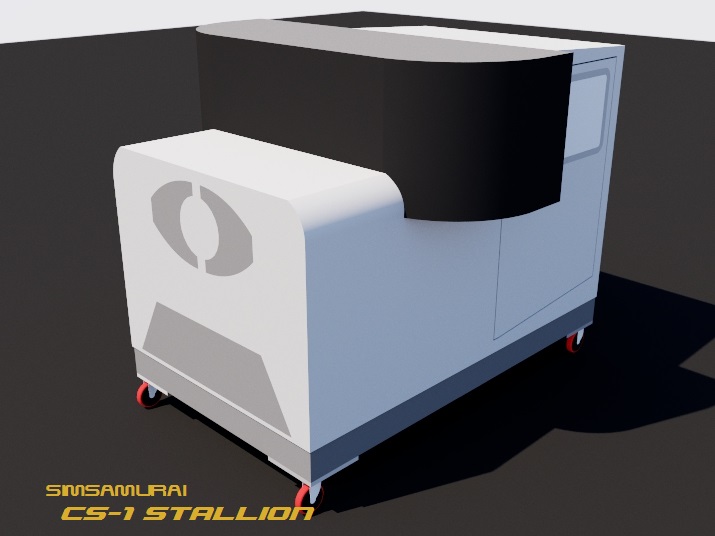
The CS1 is a long-standing popular design for general aviation use where no center pedestal console is required between the pilots. It also has side entry doors which can be built (or not). Additionally, the optional enclosed Visual Display Bonnet can house an ultra-wide display or 3x of standard HD/UHD displays, or can be easily removed and used with a projection system out front.
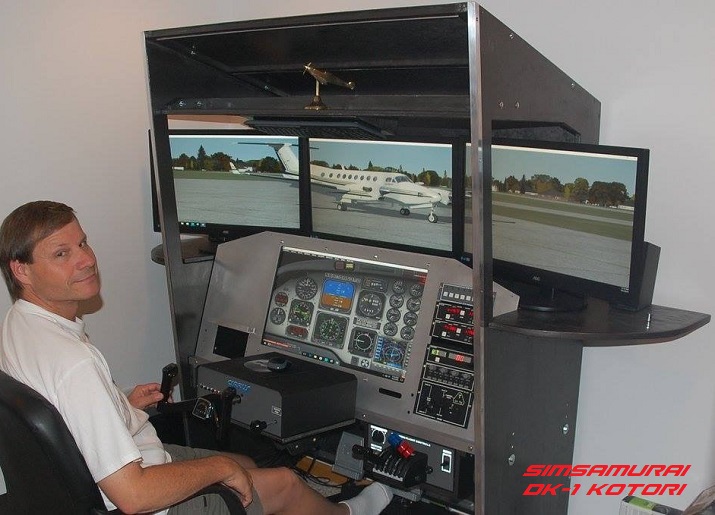
The single seat Kotori or “Song Bird” is a unique space saving design that can incorporate one or two 24″ displays for instrumentation or up to one large 32″ display and can use either three displays for the upper visuals set or a single ultra-wide curved display. While perhaps odd looking to some, this is a form follows function design that saves time and cost. The Kotori is very popular among many users who don’t want to deal with the time, cost, and complexity of building and maintaining a large simulator that often requires at least two networked computers to operate.
In-House Production Options
Up to summer 2025 we regularly offered complete in-house built cockpits as well Bare-Bones kits to be sanded, painted, and finished by the customer. Due to consistent lack of home market demand in what is already a very small global niche market overall for these types of products, and because of rising materials costs worldwide, we generally no longer produce cockpit shells unless they are part of our more advanced ProLine Series, which is professional turn-key “ready to fly” systems. However, depending on timelines and stock and availability between larger projects we may occasionally offer Bare Bones and completed Ready to Assemble options as seen on each cockpit page. And when doing so, these kit offerings will mainly only be available for purchase and shipping from March 1 to June 1 (4 months) and from September 1 to December 1 (3 months). Our commercial ProLine systems however, are offered year-round. They contain the cockpit shell, computer(s), integrated custom built flight controls, and or various off the shelf hardware or avionics units made for the commercial market. In all cases of 3rd party hardware inclusion we do not overcharge for these parts. As needed we add a nominal 10% set-up / install fee if we are installing, configuring, and then shipping these types of items to the customer. We also offer fully custom built hardware options as well retrofit actual aviation surplus hardware. Please see the Flight Controls page for more details.
We are also a brand partner with Thrustmaster and exclusively use them in our builds for off the shelf flight control hardware wherever applicable or desired, but we also encourage customers to explore all professional options that can work within their budget. Regardless, all of our designs, both DIY or ProLine, are specifically made to incorporate our custom hardware or any off the shelf hardware of your choosing. In all cases we work with our clients to form the best package possible to suit your long term goals.
For more inquiry or to purchase any one of the DIY Cockpit Designs, please click on each respective product page to complete checkout or if you have a sincere interest in our ProLine offerings or any custom build, please send your email inquiry to simsamurai@gmail.com.
1 – Simply title the email as: SimSamurai DIY Design Purchase Request (or ProLine Inquiry).
2 – If you are wanting to order a DIY design pack and wish for us to send a custom invoice in place of the automated checkout, please include the email you use with PayPal (if different from the email you are sending the request from) and we will send you a PayPal payment invoice within 12-24 hours. Orders are typically processed and emailed out within 6-24 hours of confirmed payment. Currently all orders are processed by hand and we email the documents to you personally.
Thanks for ordering!
Note: We now also accept Venmo if desired over PayPal.